Towel Care
How to Wash and Care for a Baby Hooded Towel
Machine wash a baby hooded towel warm on a normal cycle with a gentle, fragrance-free detergent, then tumble dry low. Wash it once before the first bath, and skip fabric softener, which coats the fibres and reduces absorbency. Cared for this way, a bamboo-and-cotton towel keeps getting softer with each wash rather than turning rough.
Wash a baby hooded towel warm, on a normal cycle, with a small amount of gentle, fragrance-free detergent, then tumble it dry on low. Wash it once before the first bath. Skip the fabric softener. Keep the heat gentle. That is the whole of how to wash baby towels well, and it is the same routine that keeps a bamboo-and-cotton towel getting softer over time, never rougher.
The reasons behind each step are worth knowing, because they are what keep one towel plush and absorbent wash after wash. Every hooded towel in the MiniBoo range is woven from 70% bamboo and 30% cotton to a dense 500 GSM. The bamboo is what draws water away quickly and feels soft against new skin. The cotton is what holds its shape wash after wash. Care for both fibres kindly and they reward you. Here is how.
Wash it before the first bath
New textiles pick up dust and loose fibres in the factory and on the shelf, so give the towel one wash before it ever touches your baby. This first wash also wakes the fibres up. Bamboo loosens and blooms with water, so the towel comes out of that first cycle noticeably softer and more absorbent than it went in.
Warm water and a gentle detergent are all it needs. There is no special pre-treatment, no soaking, nothing to buy. One ordinary wash, and it is ready for the very first bath.
Choose a gentle detergent
Use a mild, fragrance-free detergent, and use less than you think. A newborn's skin is delicate, and a plain detergent rinses cleaner, leaving no perfume or dye behind to sit against a cheek all night. Too much detergent is its own problem: the excess never fully rinses out, builds up in the pile, and slowly stiffens the towel. A small dose keeps it clean and keeps it soft.
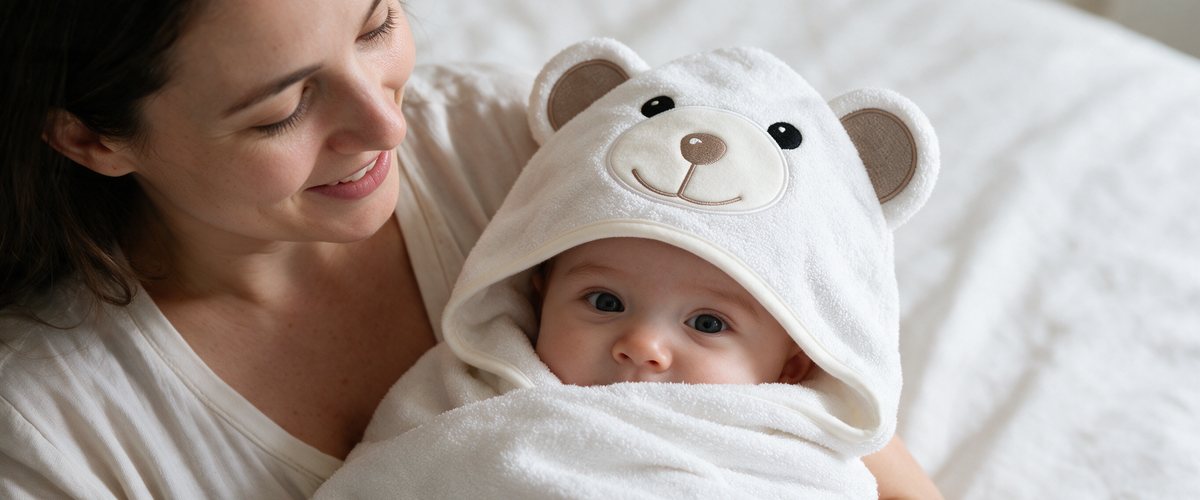
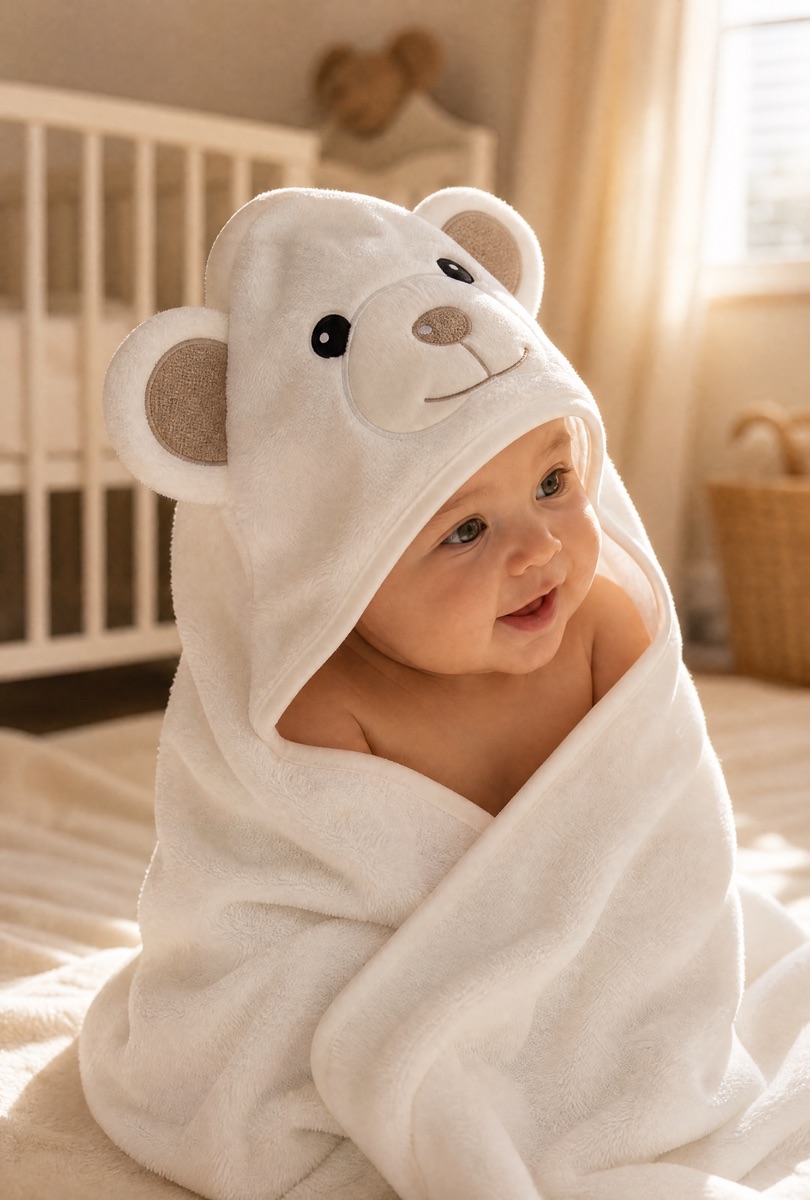
Steer clear of bleach and optical brighteners too. They are hard on coloured trims and on the friendly bear or cat face on the hood, and a well-made towel does not need them to come clean.
Skip the fabric softener
This is the step most people get wrong, so it earns its own heading. Do not use fabric softener on a bamboo-and-cotton towel.
Softener works by coating fibres in a thin, waxy film. On a bath towel, that film is the enemy. It fills the tiny loops that are meant to grab water, so the towel that felt slippery-soft at first gradually turns water-repellent over time, pushing moisture around your baby instead of soaking it up. The same goes for dryer sheets.
Your towel simply does not need any of it. Bamboo softens naturally with each wash, and a softener only gets in the way of that. If you like the idea of a softer rinse, add a splash of plain white vinegar to the rinse compartment instead. It lifts leftover detergent and freshens the pile, with no coating left behind, and the smell rinses away completely.
Warm water, gentle heat
Wash warm, not hot. Warm water lifts bath oils and residue without stressing the fibres, and it keeps the soft nursery colours true. A normal cycle is fine. Wash the towel with like colours and similar fabrics: other towels, muslins, soft cottons, rather than with zippers or hooks that can catch and pull at the loops.
Do not cram the machine full, either. A towel needs room to move so water and detergent can flow through it and rinse all the way out. An overloaded drum leaves detergent trapped in the pile, which is the quiet beginning of a stiff towel.
Drying, folding, and storing
Tumble dry on low. Gentle heat fluffs the pile back up and brings out that just-washed softness, while high heat is the fastest way to flatten the loops and wear a towel out. If you would rather line dry, that works beautifully too. A short tumble afterwards, or a firm shake, keeps it from drying board-stiff.
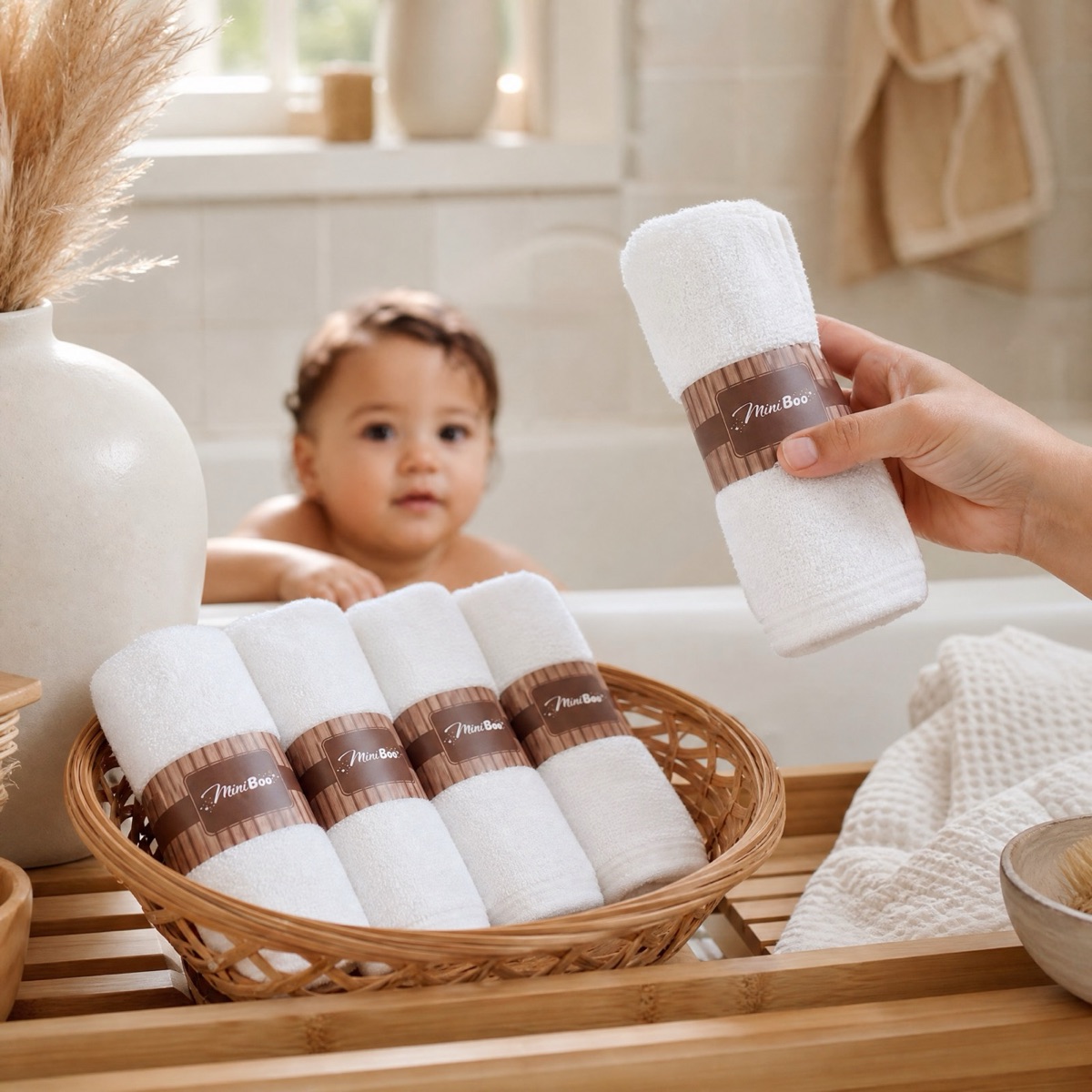
Make sure the towel and its hood are fully dry before you fold it. Fold it along its natural lines, hood tucked in, and store it somewhere with a little air around it. A fully dry, well-aired towel stays fresh between baths. The same care applies to the smaller washcloths, which are easy to keep on hand and rotate through the week.
How often to wash it
Every three to four uses is a sensible rhythm for most families, and more often if the towel takes on spit-up, a leak, or a strong smell. A baby comes out of the bath clean, so the towel is not getting very dirty, mostly just a little damp.
What matters more than frequency is drying it fully between uses. A towel that never quite dries is what develops a musty smell, not one that is used a few times before it goes in the wash. Hang it open, not bundled, and it will stay sweet for longer.
If the softness has gone
If a once-plush towel has turned stiff, or has stopped drinking up water the way it used to, it is almost always build-up. Either fabric softener residue or detergent that never fully rinsed, sometimes baked in by high dryer heat.
The fix is simple. Wash it warm with a normal dose of detergent, add a cup of white vinegar to the rinse, and skip the softener entirely. Then tumble dry on low. It usually takes one or two cycles for the loops to open back up and the softness to return.
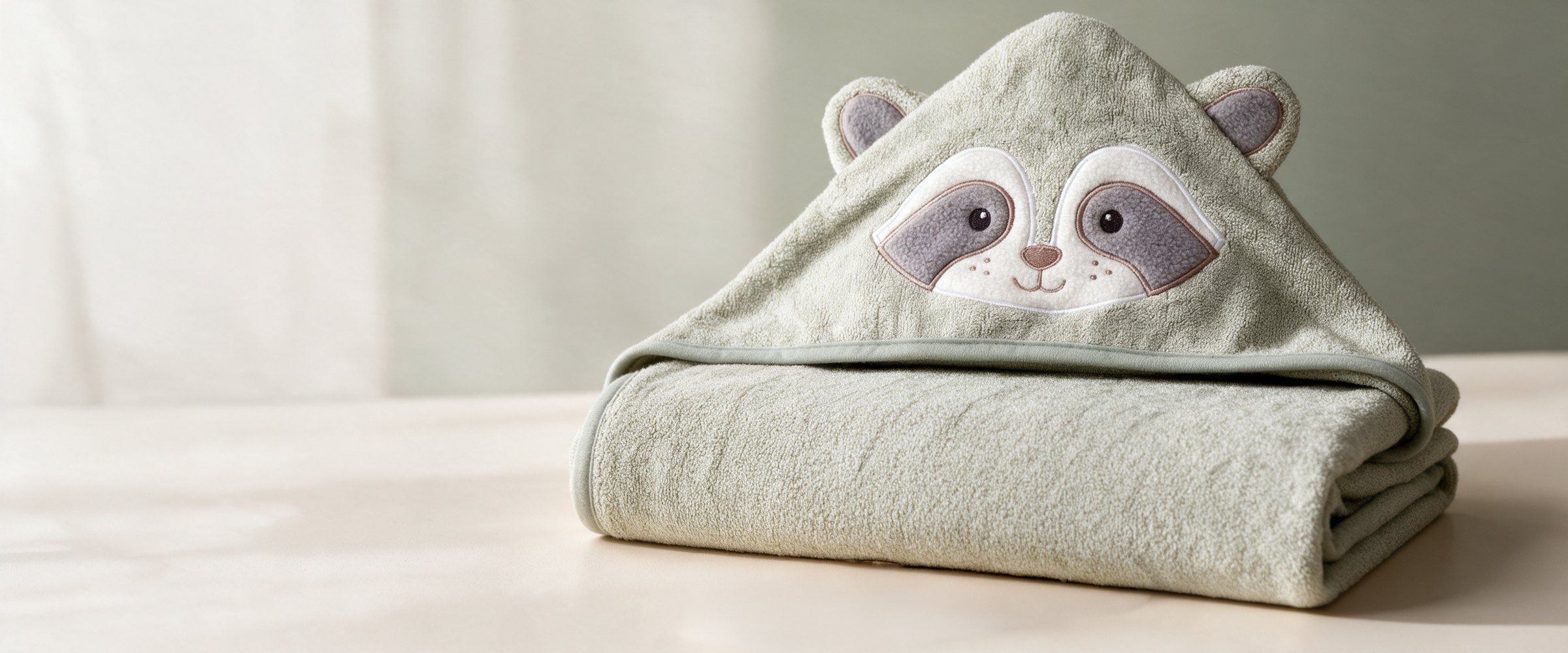
Because bamboo softens over time with proper washing, a well-cared-for Bear towel stays cozy rather than turning rough as the months go by. Looked after this simply, one hooded towel can carry a child from the very first bath through the early years, one warm wrap at a time.
From the collection

Frequently asked questions
Should you wash baby towels before first use?
Yes. A wash before the first bath clears away dust and loose fibres from manufacturing, and it wakes up the bamboo so the towel comes out softer and more absorbent. Warm water and a gentle detergent are all it needs.
Can you use fabric softener on bamboo towels?
No. Fabric softener coats the fibres in a thin film that fills the loops meant to hold water, so the towel gradually stops soaking up moisture. Bamboo softens on its own with each wash, so softener is not needed. A splash of white vinegar in the rinse freshens the pile without coating it.
How often should you wash a baby's towel?
Every three to four uses works for most families, and sooner if it picks up spit-up, a leak, or a smell. Drying it fully between baths matters more than the exact count.
Why is my baby towel not soft anymore?
It is almost always build-up: fabric softener residue or detergent that never fully rinsed, sometimes set by high dryer heat. Wash it warm with a normal detergent dose and a cup of white vinegar in the rinse, skip the softener, and tumble dry low. The softness usually returns in a cycle or two.
What temperature should you wash baby towels at?
Warm, not hot. Warm water lifts bath oils and residue while keeping colours true and the fibres in good shape. A MiniBoo hooded towel is made to machine wash warm and tumble dry low.