Bath Routine
A Calm Newborn Bath Time Routine, Step by Step
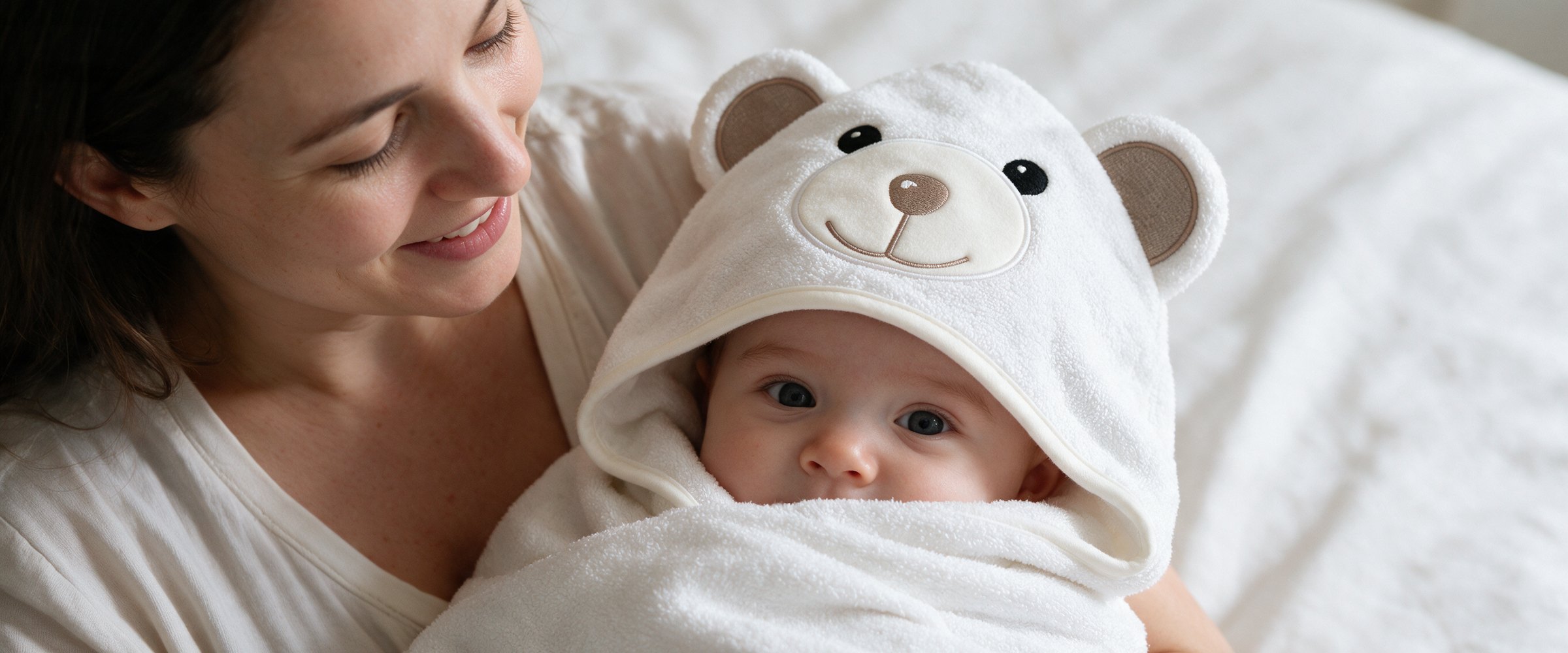
A calm newborn bath starts before the water does: gather everything within reach, warm the room, and check the water is comfortably warm, not hot. Keep the wash short and gentle, then lift your baby straight into a soft hooded towel, pat dry, and cover the head to keep warmth in. Newborns need only a few baths a week, so the aim is comfort more than cleaning.
A calm newborn bath time routine begins before a single drop of water is drawn. Gather everything you need within arm's reach, warm the room until it feels snug, and check that the water is comfortably warm rather than hot. Keep the wash short and gentle. Then lift your baby straight into a soft hooded towel, pat dry, and cover the head to hold the warmth in. Newborns need only a few baths a week, so this is less about getting clean and more about a few quiet minutes that feel safe.
Bath time is one of the first rituals you build together. It does not have to be perfect. It helps to have a simple order to follow, especially on the tired evenings, so here is a routine you can lean on and adjust to your own baby.
A newborn bath time routine: when and how often
There is no single right time. Many parents settle on early evening, because a warm bath and a soft towel make a gentle bridge into sleep. Others prefer mid-morning, when the baby is alert and unhurried. Pick the window when you feel calm too, because babies read the mood in the room before they understand a word of it.
Newborns do not need a bath every day. A few baths a week is plenty in the early months, with a gentle top-and-tail wipe of the face, neck, hands, and nappy area in between. Skipping a day is fine. Frequent, brief, and warm beats long and thorough.
Read your baby, not the clock
Try to bathe when your baby is settled: not too hungry, not overtired, not straight after a feed. A drowsy-but-content window is the sweet spot. If the evening goes sideways, it is always fine to postpone.
Set the scene first
The single biggest thing that keeps a bath calm is preparation. Newborns lose heat quickly and dislike feeling cool, so the room matters as much as the water.
Warm the bathroom before you start. It should feel almost too warm for an adult in a jumper. Close the window, and let the space hold its heat.
Then gather everything within reach, so you never have to step away with a wet baby:
- A baby bath or clean basin
- A soft washcloth
- A gentle, fragrance-light baby wash, if you use one
- A fresh nappy and clothes, laid out and ready
- A hooded towel, opened and waiting nearby
Laying the towel out open, before the bath, is a small trick that changes everything. When the moment comes to lift your baby out, the wrap is already there in one motion.
Test the water
Fill the bath with just a few inches of water. Warm, not hot, is the aim. Swirl it with your elbow or the inside of your wrist, since your hands may be used to hotter water than is safe for your baby. It should feel pleasantly warm and nothing more. If you use a thermometer, body temperature is a good guide.
Always run cold water in first and add warm, then mix well so there are no hot patches. Turn the taps off before your baby goes in.
The wash itself: short and gentle
Lower your baby in slowly, supporting the head and neck with one forearm and holding the far arm or shoulder with your hand. Keep that support the whole time. A little cupped water over the tummy helps them stay warm and reassured.
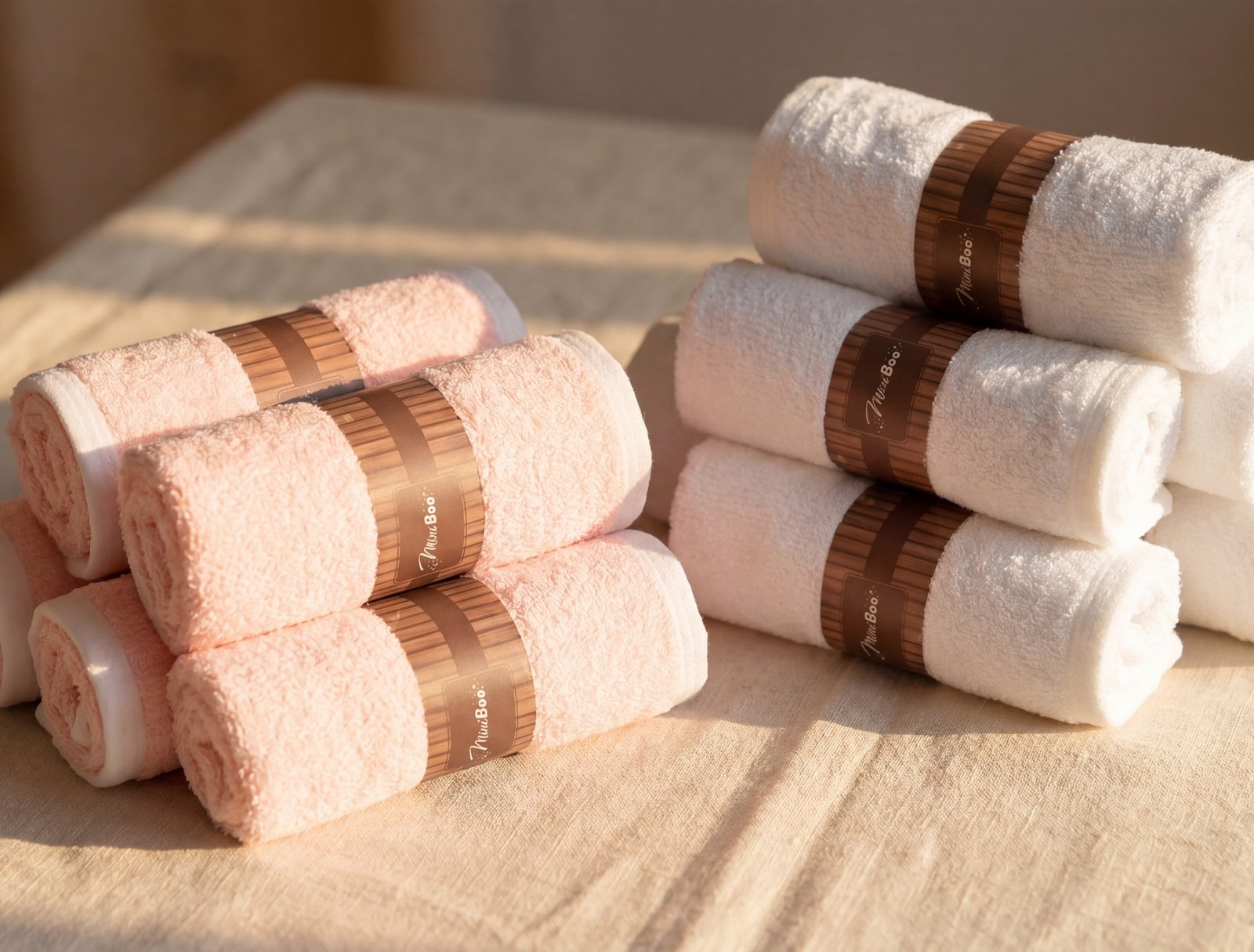
Wash from the top down, cleanest areas first. Take a soft washcloth over the face with plain water, then the folds of the neck, under the arms, the hands, and the nappy area last. You do not need much product, and you do not need to scrub. A soft washcloth is all you need for this, and it stays gentle on delicate newborn skin.
Talk or hum the whole time. Your voice is the anchor. Keep the wash to a few minutes. There is no prize for a long bath, and a shorter one stays cozier and calmer.
The lift and the wrap
This is the heart of the whole routine. Have the hooded towel open and ready, then lift your baby out in one smooth movement and bring them straight into it, hood first over the head.
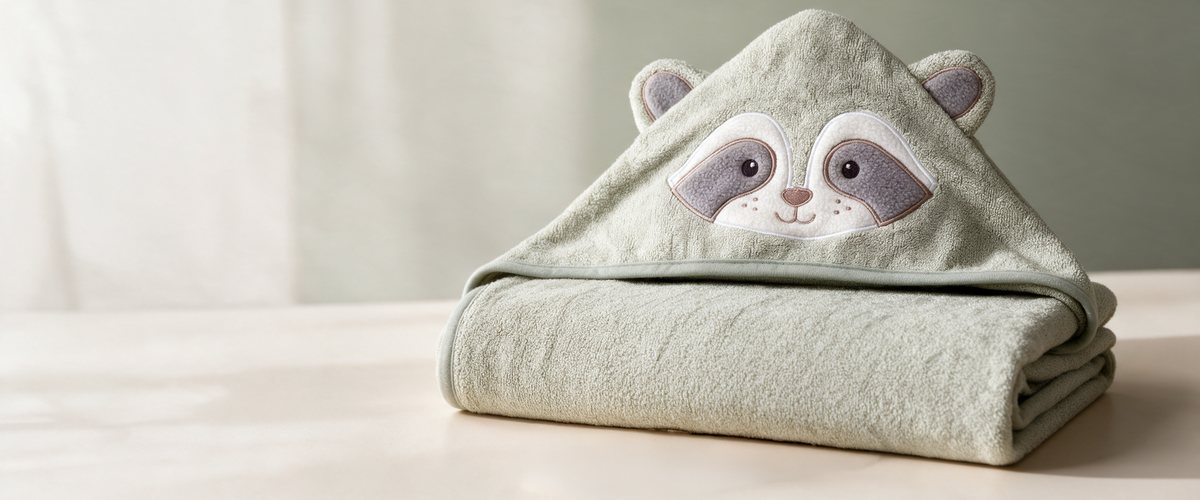
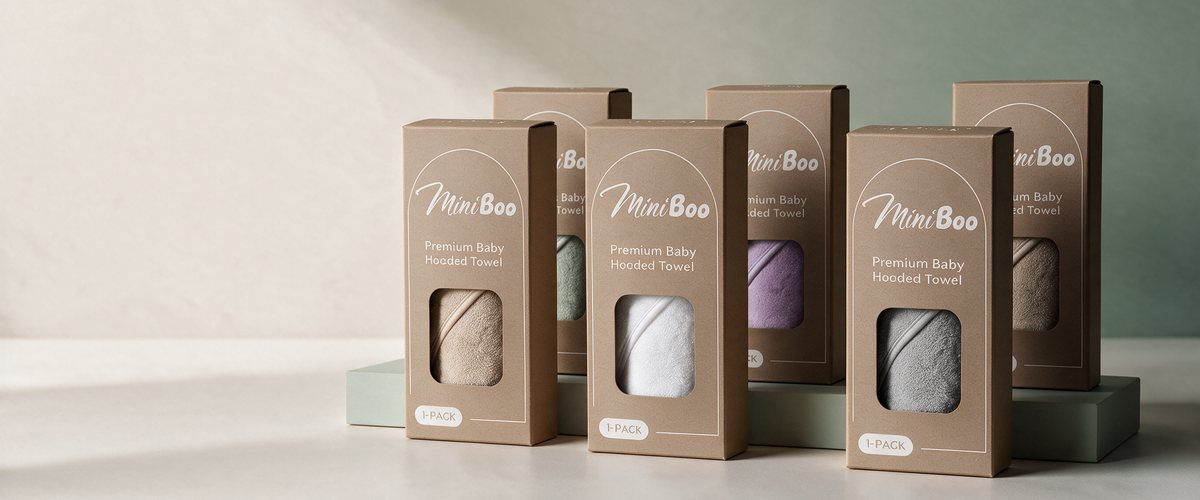
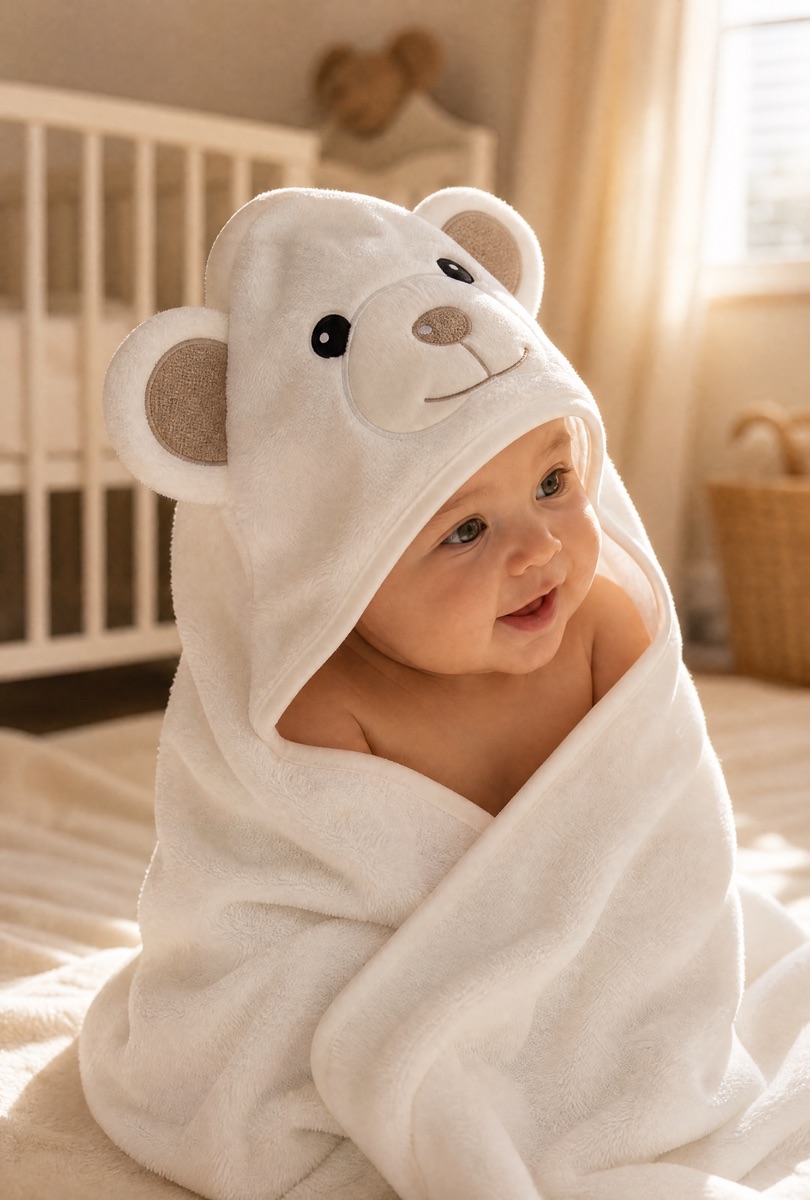
A hooded shape does something an ordinary towel cannot: it covers the head, where newborns lose heat quickly, and it swaddles the body in the same gesture. The MiniBoo hooded towels are woven from a blend of 70% bamboo and 30% cotton to a dense 500 GSM, so they draw water away quickly and stay soft against new skin. The Bear, with its little ears, turns the moment into a small ceremony, and The Koala is just as snug in soft nursery tones.
The 90 x 90 cm size wraps a newborn generously and keeps wrapping as they grow, right up to around age six. In the early weeks, that extra fabric is what lets you cocoon the whole baby, arms and all.
Pat dry, then settle
Dry by pressing, not rubbing. Pat gently through the towel and pay attention to the creases: behind the ears, under the chin, in the neck and thigh folds, and between fingers and toes. Keep the hood over the head until the last moment.
Then dress your baby in the warm, pre-laid clothes and move into the wind-down. This is the quiet part: a feed, a cuddle, a dim light. Bath, wrap, warmth, and sleep, in that order, and over the weeks the pattern itself begins to signal rest.
Every MiniBoo towel comes with a thank-you card whose QR code opens a small library of digital bonuses: ten lullabies to download and ten bedtime stories as an animated audiobook. On the calm nights, one can play softly while you rock. If you want to see the full range of characters, the whole collection is here.
Bath time will not always go to plan, and that is completely normal. Keep it warm, keep it short, keep the towel ready, and let the rest be love.
From the collection

Frequently asked questions
How often should you bathe a newborn?
Newborns need only a few baths a week in the early months. A gentle top-and-tail wipe of the face, neck, hands, and nappy area keeps them fresh in between. Frequent, brief, and warm is better than long and daily.
What temperature should a baby's bath be?
Comfortably warm, not hot, around body temperature. Swirl the water with your elbow or the inside of your wrist, since your hands may be used to hotter water than is safe for your baby. Run cold water in first, add warm, and mix well so there are no hot patches.
How do you keep a newborn calm during a bath?
Warm the room first, keep the wash short, and talk or hum the whole time so your voice is the anchor. A little cupped water over the tummy helps them feel held. Bathe when your baby is settled, not too hungry or overtired.
What should you do right after a baby's bath?
Lift your baby straight into an open hooded towel, hood first over the head, and pat dry through the fabric. Covering the head holds in warmth while you dress them in pre-laid clothes and move into a calm wind-down.